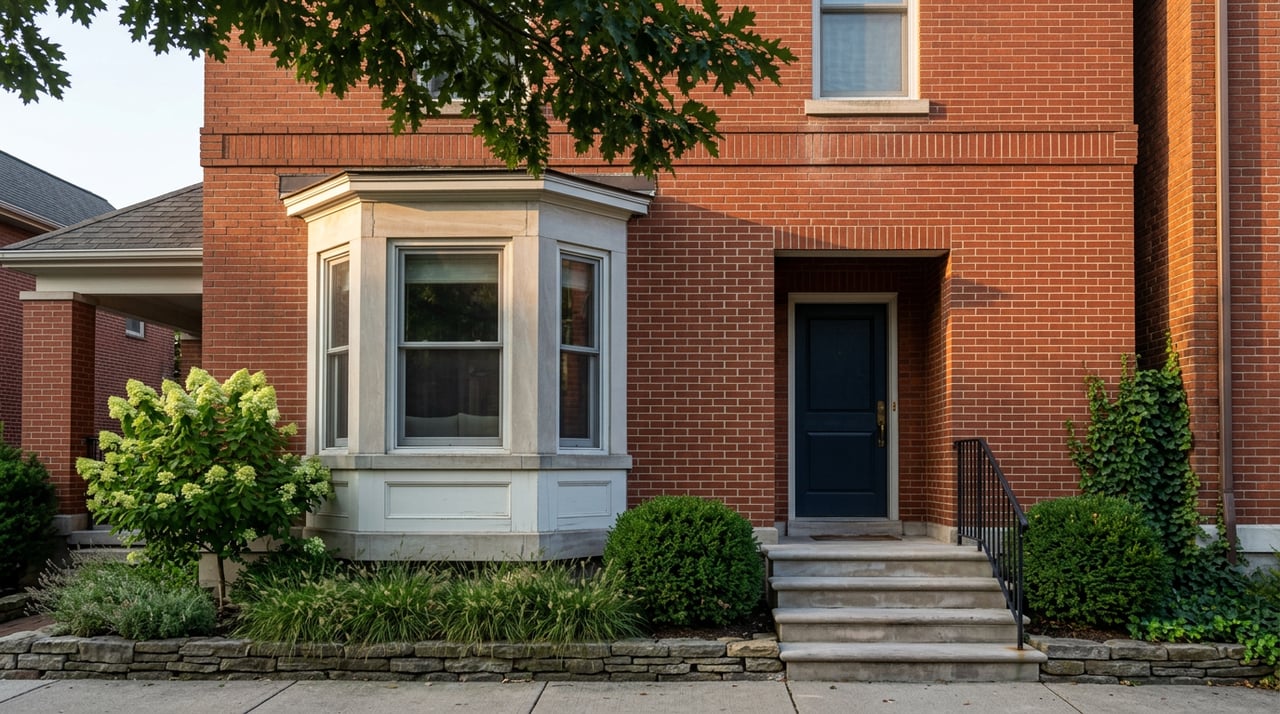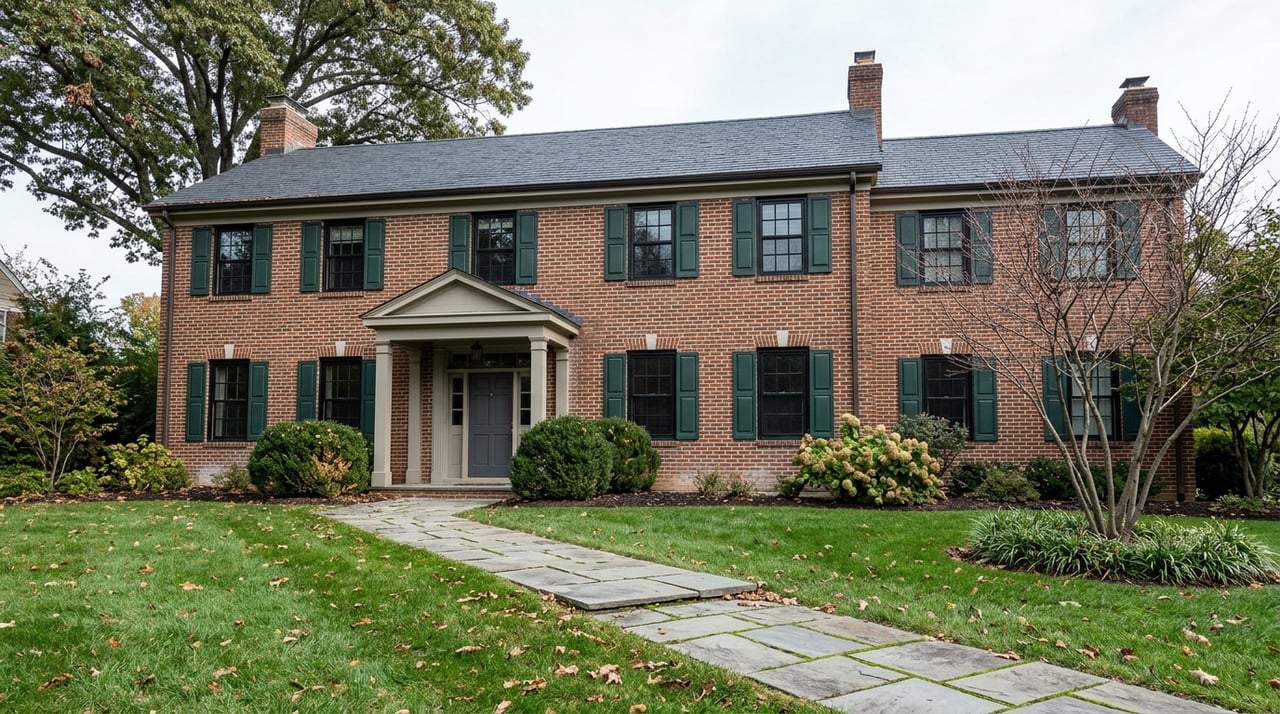
Would you pay the same amount for a house you can only ever be a house, and a house that comes with the legal right to become a duplex, a fourplex, or a six-unit building? Arlington's market just answered that question, and the answer is more interesting than either side of the zoning fight expected.
In March 2026, a five-bedroom, three-and-a-half-bath duplex in the North Highlands neighborhood sold for $1,610,000. Its neighbor, an ordinary four-bedroom, three-and-a-half-bath single-family home, had sold three months earlier for $1,615,000. Two comparable lots, two comparable price tags, one of them carrying a fundamentally different legal identity than the other.
If you are comparing Arlington to another DMV neighborhood right now, that price parity is the number that should stop you. It means the market has not yet decided what Arlington's biggest zoning fight in a decade is actually worth, and that uncertainty is a real variable in what you're buying, whether you're a buyer, a seller, or an investor trying to underwrite a lot.
What EHO Actually Allows, in Plain Terms
Arlington's Expanded Housing Option, universally shortened to EHO and commonly called Missing Middle, lets an owner build up to six units on a lot that used to be zoned for one house. The county adopted it in March 2023 and it took effect that July, covering the R-5 through R-20 single-family residential districts that make up most of the county's older neighborhoods.
The part that surprises people who haven't read the ordinance closely: EHO does not touch the building envelope. Height is still capped at 35 feet. Setbacks and lot coverage still match what a conventional single-family house would be allowed. What changes is the use inside that envelope, one detached home becomes a duplex, a triplex, or a small multiplex built to the same footprint a single house could have occupied. In most of the county, there's no parking minimum attached to it either, since county parking studies found roughly 80 percent of Arlington streets are already under-parked and don't rely on off-street requirements to function.
That's the policy as written. What's made it a genuine mess for anyone trying to value a property is what's happened to it in court.
Three Years of Legal Whiplash
The short version, because the long version has already filled local news for three years:
- March 2023: Arlington County Board adopts EHO, effective July 1.
- September 2024: A circuit court judge rules against the county on four of six counts, voiding the ordinance and every permit issued under it overnight.
- June 2025: The Virginia Court of Appeals reverses that ruling, but only on a procedural technicality, the plaintiffs failed to include the developers whose permits were on the line, including a builder called Wilson's Ventures. The merits of the ordinance itself were never addressed.
- October 2025: The county resumes accepting and reviewing EHO applications.
- May 2026: The Virginia Supreme Court agrees to review the case, again strictly on the procedural question, not whether EHO is legally valid.
As of today, EHO is the law of the land in Arlington and the county continues processing permits under it. But everyone involved expects another round. The group funding the opposition, Neighbors for Neighborhoods, has said publicly it expects the case to reach trial within three to six months of the May ruling, which puts a real decision point somewhere in the coming months, not years.
Why the Price Parity Is the Real Story
Here's what should happen if a market is pricing legal risk correctly. Either buyers pay a premium for redevelopment rights, because six units of future value beats one, or they demand a discount for the uncertainty, because a permit that's been voided once already isn't worth full price until the litigation ends. One of those two things should show up in the comps.
Neither one did in North Highlands. The duplex and the conventional house sold within $5,000 of each other, months apart, in the same stretch of blocks. That's not a market confidently pricing optionality. That's a market that hasn't figured out how to price it yet, which is a very different situation for a buyer to walk into than either a premium market or a discount market.
For a seller, that's a warning that a redevelopment-eligible lot won't automatically fetch more just because the zoning technically allows more. For a buyer or investor betting on future upside, it means you may be able to acquire that optionality today at essentially no premium, which is either an opportunity or a sign that other buyers know something about the litigation risk you don't. As of April 2026, the county's own permitting dashboard listed 59 EHO projects in some stage of the pipeline, with nine more approved in the ten months since the Court of Appeals reinstated the ordinance, totaling 40 units. That's real activity happening inside a legal cloud, not activity waiting for the cloud to clear.
Where This Tension Actually Concentrates
EHO applies countywide, but it isn't evenly contentious. The friction is sharpest in the older, walkable single-family enclaves that sit just outside Arlington's high-rise Metro corridors, places like Lyon Village, Lyon Park, and Ashton Heights near Rosslyn-Ballston, where residents bought into quiet, low-density blocks a short walk from a train station that itself supports 300-foot towers a few streets away. Actual built or contested EHO projects have shown up in North Highlands, Claremont, Aurora Hills, and Leeway Overlee, giving a buyer looking at those areas specific streets to research rather than a countywide abstraction.
One county planning advocate summed up the frustration from the pro-density side simply:
"I actually call it the EHO exodus."
That's Jay Hamilton, speaking for Neighbors for Neighborhoods, describing what he says is a wave of longtime residents leaving after multi-unit buildings went up next to them with limited notice. Whether you read that as a policy failure or growing pains, it tells you the disruption is concentrated block by block, not spread evenly across the county, which is exactly why a neighborhood-level comparison matters more than a countywide median here.
What This Means If You're Comparing Neighborhoods Right Now
Arlington County's broader numbers are healthy on their face. Over the three months ending May 2026, the median sale price across the county sat at $818,000, up 2.3 percent from the same period a year earlier, with homes averaging 27 days on market. Those are the kind of numbers that make a market look straightforward from a portal search.
What they don't show is that two houses on the same block can carry different legal futures right now, and the market hasn't finished deciding how much that difference is worth. If you're weighing Arlington against a neighboring jurisdiction, or weighing one Arlington block against another, it's worth checking a specific address against the county's EHO project list before you assume you know what you're buying. A permit in good standing today could be litigated again by spring. A conventional single-family lot could quietly become development-eligible with only 20 business days of zoning review standing between an application and approval. The county maintains an updated public page tracking the case status and permitting rules directly, which is the most reliable place to confirm where a specific property stands before you write an offer.
FAQ
Does the lawsuit affect every home in Arlington, or just certain neighborhoods? EHO applies by right in the R-5 through R-20 districts, which cover most of the county's older single-family neighborhoods. The legal uncertainty applies wherever those districts exist, though the visible construction activity has concentrated in specific neighborhoods like North Highlands, Claremont, and Aurora Hills.
If a house already has an EHO permit, is that permit guaranteed to survive the next court ruling? No. The September 2024 circuit court ruling voided every existing EHO permit overnight, with the county notifying developers directly that approved permits no longer existed. A future ruling on the merits, rather than the current procedural question, could do the same again.
How do I check whether a specific Arlington property has EHO history or eligibility? Arlington County maintains a public EHO information page with current case status and a permitting dashboard. Checking a specific address there, rather than relying on general neighborhood reputation, is the only way to know where a given lot actually stands.
Zoning uncertainty like this doesn't show up on a listing sheet, and it rarely gets explained clearly before an offer deadline. If you're comparing Arlington to another neighborhood in the DMV, or trying to understand what a specific lot's legal status means for your timeline, the Lyndsi + Matt Team can walk through the permit history and current status address by address. Schedule a complimentary consultation before you write an offer, not after.