Touring homes in Bethesda and trying to decide between a sleek new build and a classic colonial under mature trees? You are not alone. This choice shapes your daily life, budget, and timeline. In this guide, you will compare layouts, energy performance, maintenance, resale potential, and local costs so you can choose with confidence. Let’s dive in.
Bethesda market snapshot
Bethesda is a high-priced, transit-oriented suburb with strong demand near downtown, Metro, and major employers. You should expect mid six to low seven figures for many properties, with single-family neighborhoods often around or above $1.0M. Proximity to the Red Line and Bethesda Row consistently influences value.
Schools are part of many buyers’ decision sets. The area is served by Montgomery County Public Schools, with several clusters featured in local rankings. For context, see recent coverage of MCPS placements in state lists from Bethesda Magazine.
Property taxes vary by district. Montgomery County’s levy year 2025 schedules show combined rates in many Bethesda districts in the approximate range of $1.12 to $1.26 per $100 of assessed value. As simple math, a $1,200,000 assessed value at $1.20 per $100 equals about $14,400 per year. Always confirm your district’s exact rate using the county’s Real Property Tax Rate Schedule.
Layout and daily living
New construction often gives you an open main level with a large kitchen, family room connection, and flexible office or guest spaces. Primary suites tend to be larger, and you will usually see generous closets and multi-zone HVAC for comfort. These layouts fit today’s work-from-home and entertaining needs.
Classic Bethesda homes, including colonials, Tudors, ranches, and split-levels, often have more compartmentalized rooms. Kitchens may be smaller, and flow can feel formal. If you want an open plan, you may budget for a remodel. Many buyers still prize these homes for their street presence, mature trees, and established blocks.
Energy, systems, and performance
New homes typically perform better on energy use than older stock. National HERS data show newly rated homes often achieve significantly lower scores than existing homes, which means better efficiency and comfort. Review any claimed HERS results or certifications; the RESNET HERS Trends report offers helpful benchmarks.
Builders increasingly offer high-efficiency heat pumps, higher SEER2 HVAC, and efficient water heaters. These choices can reduce operating costs and shift you away from older gas-fired systems. Always confirm make, model, and ratings during selections.
Maintenance expectations and warranties
A common rule of thumb is to set aside about 1 to 3 percent of your home’s value annually for maintenance and small repairs, with older homes sometimes trending higher. For a $1.2M property, that is roughly $12,000 to $36,000 per year. See this overview of maintenance budgeting from HomeLight.
New builds usually need less near-term maintenance and include builder warranties. Many follow a 1-2-10 structure: 1 year for workmanship, 2 for systems, and up to 10 for major structural defects. Terms vary by builder, so request the full warranty text in advance. Here’s a helpful warranty explainer from This Old House.
Character and lot tradeoffs
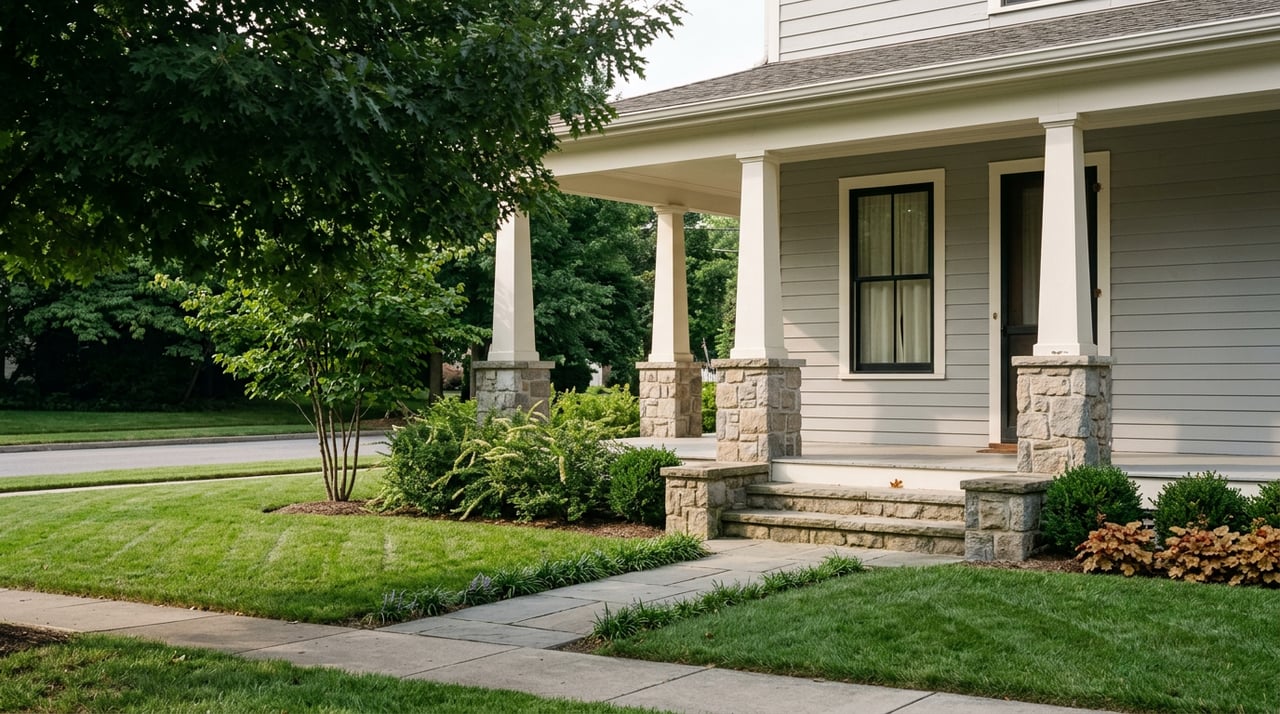
Resale homes often deliver character you cannot replicate quickly: original millwork, varied elevations, and mature landscaping that softens privacy and curb appeal. New infill homes may sit on smaller subdivided lots and have newer plantings. Buyers who value instant shade, established streetscapes, and lot depth often lean resale, while those who prioritize modern finishes and predictability lean new.
Resale outlook in Bethesda
Location and school cluster drive buyer demand in Bethesda. New homes can command a premium for layout and systems. Classic homes in sought-after settings often retain strong land and landscape value. If you match property type to your priorities and the micro-location, you will position yourself well for future resale.
Costs and timelines for new builds
Construction cost varies widely by finish and site conditions. Industry references place local custom and new construction in Montgomery County in a broad range around $200 to $400 per square foot with luxury projects higher. Review the NAHB cost-of-constructing overview for national context, then confirm local bids.
Build time also varies. Production homes often take about 6 to 9 months once construction starts, while custom builds can run 9 to 11 months or more. Pre-construction activities like design, permits, and site work can add months. Plan on a realistic 9 to 18 month calendar from contract to move-in, and request milestone dates in writing. See typical causes of delay in this NewHomeSource timeline guide.
Financing and inspections
New construction often involves a construction-to-permanent loan or a builder’s preferred financing. Clarify interest-only draw terms, rate locks, and appraisal milestones before you sign. Ask whether any builder incentives require using their lender.
You still need inspections. For a classic home, schedule a general home inspection and specialist checks as needed. Montgomery County requires radon testing for single-family home sales; review the county’s radon handout and consider follow-up testing. For homes built before 1978, federal law requires lead-paint disclosure and you may choose testing. Learn more about Title X on the EPA’s lead page.
For new builds, independent milestone inspections are smart. Consider pre-pour foundation, framing, mechanical rough-in, and a detailed final walkthrough with a punch list. Put inspection rights and timing in your purchase agreement.
Quick comparison table
| Factor | New Construction | Classic Resale |
|---|---|---|
| Layout | Open plan, large kitchens, flexible office/guest space | Formal rooms, compartmentalized flow, remodel often needed for open plan |
| Energy & systems | Higher efficiency, new HVAC and envelope, lower near-term utility risk | Varies by age; efficiency upgrades may be needed |
| Near-term maintenance | Lower, plus builder warranty coverage | Higher likelihood of system or roof replacement windows |
| Timeline to move-in | Longer; 9 to 18 months is common from contract to keys | Shorter; standard closing timeline if not renovating |
| Lot & setting | Often newer landscaping, sometimes smaller infill lots | Mature trees and established streetscapes, lot depth can be a premium |
| Customization | High during selections and change orders | Lower unless you renovate |
| Resale drivers | Modern layout and systems | Location, lot, and character value |
Questions to ask a builder
- Can I review the full purchase contract and complete warranty now, including claim procedures and timelines?
- Which systems are standard vs optional (HVAC model, water heater type, insulation R-values, window specs, roofing product)? Can I have model numbers?
- What energy target will this home meet (HERS score or similar), and can you share example reports from prior builds?
- How do change orders work, what are selection deadlines, and how are costs priced?
- Who are the key subcontractors, and can you provide 2 to 3 recent buyer references and a sample punch list?
- Will my independent inspector be allowed at milestones, and is that in the contract?
- What is the realistic build schedule with buffers for weather and supply delays? Can we set milestone dates in writing?
Questions to ask a listing agent
- How old are the roof, HVAC, water heater, and windows? Do you have permits and service records?
- Are there known issues or past repairs I should review, such as foundation, water intrusion, pests, or radon results? For pre-1978 homes, are there lead-paint disclosures?
- Which improvements were permitted and which were not? Can you share permit numbers?
- How does this home compare in price and days on market to nearby renovated homes or recent new builds? Can we review recent comps?
Who benefits most from each option
Choose new construction if you want a modern floor plan, efficient systems, minimal near-term maintenance, and the ability to tailor finishes. Expect a premium for turnkey features and a longer timeline.
Choose a classic resale if you value mature landscaping, architectural character, and established neighborhoods. You can often move sooner, and you may capture lot or setting advantages, but budget for updates and system replacements as needed.
Still torn? A strategic search in Bethesda and nearby submarkets like Silver Spring, Rockville, and North Bethesda can reveal a sweet spot that matches your goals. If you want a curated set of options, personalized timelines, and clear renovation cost planning, we are here to help.
Ready to compare real homes side by side and map out your path? Reach out to The Lyndsi + Matt Team for a complimentary consultation tailored to your move.
FAQs
How do Bethesda property taxes work on a $1.2M home?
- Montgomery County sets rates by district. If your combined rate were $1.20 per $100, a $1,200,000 assessment would be about $14,400 per year. Confirm your exact district rate using the county’s Real Property Tax Rate Schedule.
What is a realistic new-build timeline in Bethesda?
- Many buyers see 9 to 18 months from contract to move-in depending on design, permitting, utilities, and weather. Typical construction time runs about 6 to 11 months once building starts, per NewHomeSource.
Do I still need inspections for new construction in Maryland?
- Yes. Schedule independent milestone inspections and a detailed final punch list. Warranties are helpful but do not replace third-party verification of workmanship and systems.
Are new homes always cheaper to operate than older Bethesda homes?
- Not always, but many new homes are more efficient thanks to better insulation, windows, and HVAC. Review any HERS documentation. The RESNET trends report outlines how newer homes often test more efficient than older stock.
Should I test for radon or lead in a classic Bethesda home?
- Yes. Montgomery County requires radon testing for single-family sales, and federal law requires lead-paint disclosure for pre-1978 homes. See the county’s radon handout and the EPA’s lead law overview.
Can I get tax credits for energy-efficient features?
- Federal incentives change over time. Check the IRS page on home energy tax credits for current eligibility and rules before you rely on any figures.